By Michelle M. Sharp, Founder and Content Creator of Meet the Minnesota Makers
“Growing food is stressful,” explain Jade and Carrie of the artist-led Black Radish Urban Farm in Minneapolis. “It’s also a beautiful thing. Local food can build community.”

Carrie and Jade of Black Radish Photo Credit: Zoe Prinds-Flash
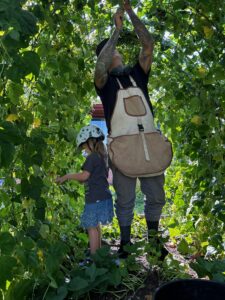 Working from their own home and 14 other yards in south Minneapolis, Jade and Carrie cultivate fruit trees, maintain chickens, nurture potatoes, and battle jumping worms. The Black Radish offers a different vision of what a farm looks like. Farming happens within the community it primarily feeds when it manages to find space to grow.
The Black Radish follows organic and environmentally-sustainable agricultural practices. This means low or no till management in their “fields,” use of cover crops for soil protection, and integrated pest and disease management to avoid introducing chemicals into their produce and Minnesota’s watershed. Farming this way involves a lot of labor from its people. Most farm machinery’s design only makes it useful on large, open fields–not distinct urban yard plots.
Community Building
Over 60 families benefit from their efforts through The Black Radish’s CSA (Community Supported Agriculture). Since founding their urban farm in 2018, they now distribute a 12-14 week share of hyperlocal produce. “We’re amazed at how growing food in our urban area has brought so many people together,” says Carrie.
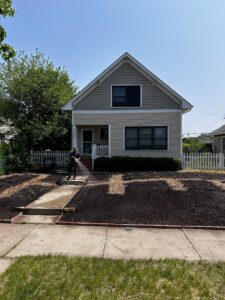
The Black Radish wants to increase their capacity to feed their community. They are working to secure a quarter acre of open land located two blocks from the center of their growing spaces. Incorporating a concentrated piece of land that they own outright will double if not triple their current production capacity. The primary barrier to having incorporated this land into The Black Radish’s fold is financial. “Buying city land is a Quixotic task for people operating on a dental floss budget,” states Jade. “We hope to begin advocating for easier, affordable access to empty spaces for farmers and large-scale gardeners in metro areas. We know that most communities would back an urban farm in their neighborhood, but the 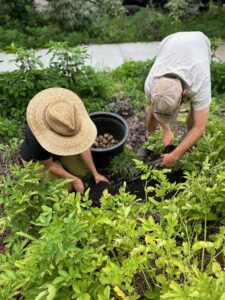 astronomical price of urban land proves prohibitive to most.”
 Acquiring this additional land will also allow The Black Radish to increase their community outreach in education. “We want to work with and teach kids and young adults about farming,” shares Jade. “Maybe some of them will enter into agricultural work themselves. Maybe they’re better informed consumers who question where their food comes from. Maybe they learn to recognize the plants. It all matters. There’s power in that knowledge.”
“We wanted to do something that would bring our community together after years of working in the art world,” shares Jade. Living about a mile from George Floyd Square, Carrie and Jade sought to create a fruitful space for community healing. “The upheaval of the past few years really drove our mission to build something different, something for everyone to share,” says Jade. In early 2026 that work expanded through efforts with Junto Podemos to provide access to food and hygiene items for community members directly impacted throughout Operation Metro Surge. “We found that we best fit in the role of collecting donated food and toiletries and connecting people to food by getting Sanneh food boxes to those in hiding,” reflects Jade.

Group Effort!
Gathering the Harvest
Members enter backyard cedar shed to contemplate the week’s offerings. Following the path around the house feels like a mini-retreat. The dark wood of the shed, a result of a stain made from vinegar and steel wool, gives way to a cool and quiet space. The gentle hum of the air conditioning unit they installed to keep the produce fresh feels like a zen water feature. The air is perfumed with the fresh potential of all of the veggies and fresh flowers. It’s so peaceful.
The Black Radish’s CSA members visit the backyard shed each week and choose, with some guidance, from the bounty on display. Members often have the shed to themselves, which allows for a moment of reflective gratitude for what’s on offer. Jade takes charge of arranging the produce and creating each week’s whimsical menu board. 
The Black Radish is a zero waste farm. Whatever produce is not selected by their CSA members or purchased by local restaurant partners including Oro by Nixta, The Standish Cafe, North Star Deli, Nice Time Market and occasionally Kado No Mise, becomes a donation to the Sanneh Foundation’s food distribution program. Operating out of the local Corcoran park every Friday, the Sanneh Foundation feed upwards of 500 families a week. “We make a small dent but the ultra fresh food is cherished,” says Jade. “We also grow culturally-specific foods for the distribution such as epizote, papalo, various Central American peppers and huauzontle.” Thanks to supplemental donations from their CSA members and those who elect to donate shares, The Black Radish is able to guarantee some of the culturally-specific foods for the Sanneh community.
 Building Something New
Carrie and a crew of volunteers oversee the weekly harvest. She has a deep love for potatoes, total admiration for straw flowers, and is very protective of her herbs. Thanks to a partnership with the Standish Cafe, they are able to begin their harvest each Tuesday and store it in the restaurant’s coolers until pick up time.
Jade is partial to their Swiss chard and summer squash. He’s also become a big fan of their Japanese turnips. “I love how we keep learning about new vegetables as we expand our farm,” says Jade. “Some of it comes from community suggestions and some because they’re things that we want to try. We do a lot of experiments.”
Carrie and Jade agree on their favorite parts of their journey into farming. “We love learning about our neighbors and helping them when they need help,” they shared. “It’s so fun to see what people make out of our produce. We love when people share their menus that they shaped around our produce.”

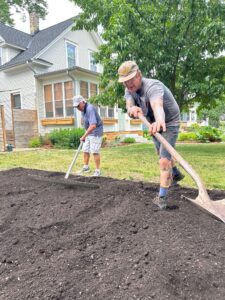
Compost and Soil Delivery Day!
Jade and Carrie also welcome neighbors who invest in the farm through labor shares, exchanging time spent weeding, planting, and preparing the harvest for their own shares of the weekly produce. “We rely heavily on a core group of volunteers that help primarily on Wednesdays with a few volunteer help days throughout the week,” shares Jade.
“Our farm in non-traditional in every aspect,” states Carrie. “We feel like it’s more community art than farming. We want to be able to replicate our model and grow into other neighborhoods. More people should be able to come together in their own community through food.”
How You Get Involved
Visit theblackradishmpls.com to learn about the membership levels. Pricing reflects The Black Radish’s goal to provide equitable access to membership. Become a sponsor to enable the purchase of tools, additional plot acquisition and conversion, and a future greenhouse to extend their growing season.
Contact Jade and Carrie [email protected] or visit The Black Radish’s csa-membership page for information on signing up for shares.
Secure the future of The Black Radish through a tax deductible contribution to their fundraiser to purchase a quarter acre of urban land for farming.
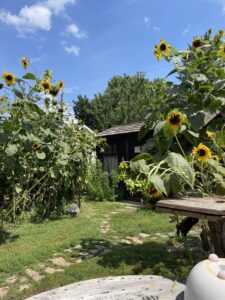
Through their Wednesday Rounds that they share on social media, everyone’s invited to celebrate sexy eggplants, towering sunflowers, and bountiful beans grown in magical tunnels. Jade and Carrie also use the Wednesday rounds to document the challenges of summer hail storms, battles with squash vine borers, and how they mindfully convert urban lawns to pollinator-friendly spaces with high density produce yields. Follow along on Facebook and Instagram to join Carrie, Jade and their kids on the Wednesday Rounds.
Visit meettheminnesotamakers.com or follow @meettheminnesotamakers on Facebook and Instagram to discover the small business owners leading Minnesota on a tasty sustainable path forward. Meet the Minnesota Makers is a news site that connects you to the local food, farms, artists and artisans that make Minnesota thrive.










Terrific story, wonderful piece of art. So glad to know the artists.🔝♥️
Thank you for reading! It was thrilling to see how much Carrie and Jade produce through the multi-yard farm. It’s an exciting model of how good food can grow.
I have watched Black Radish grow since the beginning! I am so proud for what my daughter, Carrie and Jade and the kids have created!