| WHO: | Lucy Soderstrom of the Ely Folk School | ||
| BUSINESS TYPE: | School hosting community arts and crafts classes, events, and an artist mercantile | ||
| SIGNATURE PRODUCTS: | Slovenian walnut Potica class, ceramics studio, beaver hat making class | ||
| WHERE:
SOCIALS: WEBSITE: |
Ely, MN |
By Millie Frankel, Staff Writer at Meet the Minnesota Makers
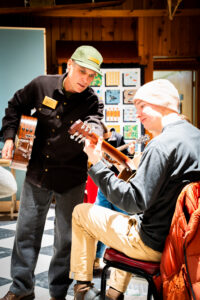 “Ely is a really creative place. I think that everyone who lives in Ely is here because it’s where they really want to be,” says Lucy Soderstrom, executive director of the Ely Folk School. “People give themselves time to really engage with and explore what they’re curious about.”
The first class the Ely Folk School ever held was a songwriting class with a local musician in 2015. Now, the Folk school works with over 80 individual artists, 75% of whom have homes in Ely, to put on educational programming in fiber arts, folk arts, music, metalworking, humanities, and Northwoods skills and crafting, along with youth classes. The creativity, passion, and knowledge of the Ely community has allowed the Folk School to grow and thrive. 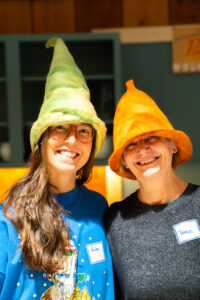
The Ely Folk School’s programming has the dual purpose of developing knowledge within the community while giving artists and makers an opportunity to grow their creative businesses. “I believe arts jobs should be considered real jobs,” says Lucy. “One thing the Folk School does is provide an on-ramp to making money off of art.”
Teaching a class at the Folk School gives artists and makers practice talking about and promoting their work while allowing them to connect with other artists and people interested in their craft. The Folk School also has a mercantile where school instructors can consign their work and passersby can purchase items such as handmade brooms, multi-media art, or Shelly Tahija’s popular sauna hats, felted with animal and floral designs.
Community Knowledge: What is a Folk School?
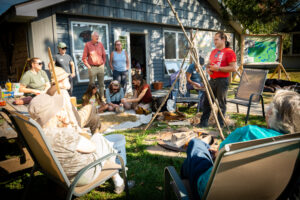 The Ely Folk School was founded in the tradition of the Folk School Movement, which originated in 19th century Denmark during the country’s transition from monarchy to democracy. The movement was started by the scholar N.F.S. Grundtvig, who wanted to maintain the voice and autonomy of rural farmers as their country modernized. “Grundtvig would say, ‘we don’t need to send everyone away to the big cities to learn Latin and Greek,’” explains Lucy. “We need people right here, teaching each other what they’ve learned,
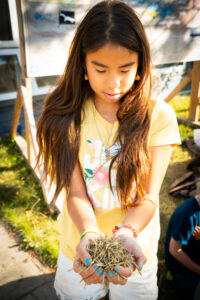 such as how to keep their soil healthy, because that’s relevant to our own lives. Folk schools are all about intergenerational, non-competitive learning for life.” Grundtvig wanted to give people the resources to enrich and preserve the knowledge of the place in which they live.
The Ely Folk School is full of community and intergenerational knowledge. Each October, the Folk School puts on a wild rice processing camp called Manoomin Gabeshiwin, where participants learn about Native practices of gathering, harvesting and processing food by hand.
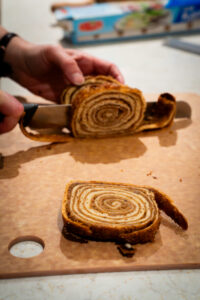 “One of our most popular food classes is Slovenian walnut Potica,” explains Lucy. Many Slovenian immigrants settled in Ely, and participants have childhood memories of family members making the enriched sweet dough stretched to the size of the kitchen table and stuffed with honey walnut butter paste. “We have people coming to that class and saying, ‘man, I grew up watching my grandmother make this. We had it at every birthday, every Christmas, every funeral, but I didn’t get the chance to learn how to make it with her before she passed.’”
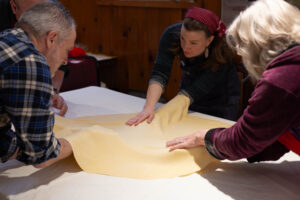
The class helps Ely community members connect with their heritage, but it can also be a fun way for tourists to spend a weekend morning. “It is super welcoming for people who are looking to learn about the area or are on vacation in Ely and just want to learn a little bit more about what this place is and what it means to people,” says Lucy.
Ely Folk School’s Roots in the Environment
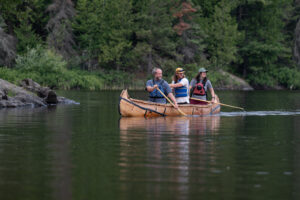 Another way that the Ely Folk School engages with local knowledge is through the environment and its materials. “We do beaver hat making and we talk about beaver impact on the Northwoods and what it means to trap them ethically,” explains Lucy. “When working with birch bark, we talk about how to harvest it ethically and how to ensure that the trees remain a vital part of the ecosystem.”
When Ely was hit by wildfires in July, many of the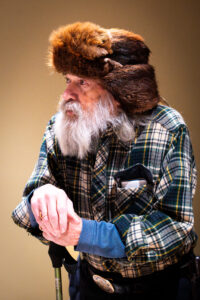 instructors were evacuated from their homes and classes were cancelled. One instructor, an herbalist named Tracy, decided to respond to the crisis differently. Even though she was also evacuated from her home, “she threw herself into adapting her class to give people herbal tools to deal with the stress of what was happening,” says Lucy. Tracy developed a lesson in which she taught participants how to use local plants to create a soothing tea, creating a space where they could “process and regulate together and with the land around us,” remembers Lucy. “Despite everything in her world being topsy turvy, she looked for ways to connect with people and share what she knows and share her love for the plants around us. It was really special.”
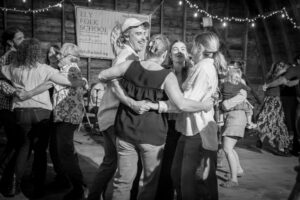 The past four summers, the Folk School has also hosted a Kräftskiva, or a Swedish crayfish party, which is a popular celebration during the height of summer and the crayfish season in Sweden.
In Ely, crayfish are invasive, so the Ely Folk School worked with the Aquatic Invasive Species Department of Lake County to ethically harvest the crayfish. “It’s a really unique and fun way to learn about our local waterways and the things that we can do to keep them healthy,” explains Lucy. “We eat a bunch of crayfish, we sing some silly songs in Swedish, we make hats, and work with kids to decorate the building. I think it’s pretty charming.”
Lifelong Learning: The Ely Folk School Promise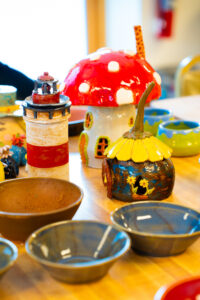
Sometimes, it all comes full circle. In 2021, the Ely Folk School opened up a ceramics studio. Says Lucy: “One of our first students in the pottery studio took an eight-week-long ‘basics of wheel-throwing’ class, joined the studio as a member, and then opened her own pottery shop. Now she has a brick-and-mortar just across the street from us, which is super cool.”
The Ely Folk School is a multi-hyphenate. It provides one-of-a-kind educational opportunities that enrich the environmental and community 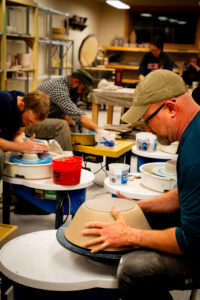 knowledge of Ely. It uplifts and generates opportunities for local artists and craftspeople. It provides a community space for people to be together while working with their hands.
If you’re an Ely resident, on vacation, or just passing through, drop in to a class at the Ely Folk School. You might not see your dream class on the schedule right away, but according to Lucy, every class at the Folk School is worth experiencing. “Take a class anyway. We work with really, really cool people who make Ely their home and who spend a lot of time creating and thinking and planning these classes. Even if it’s not something you initially thought you wanted to make, I think you’ll learn something.”
Keep In Touch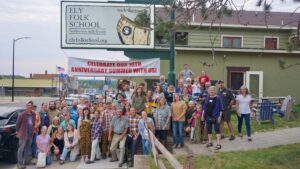
Discover the next class you take at https://www.elyfolkschool.org/ .
Follow @ElyFolkSchool on Facebook, Instagram, and YouTube for a look behind the scenes of classes and events.
Visit meettheminnesotamakers.com or follow @meettheminnesotamakers on Facebook and Instagram as well as Ambit and LinkedIn to discover the small business owners that make Minnesota an amazing place to be! Meet the Minnesota Makers is a news site that connects you to the local food, farms, artists and artisans that make Minnesota thrive.